Wednesday, January 31, 2024

Preferred early dating for Gospels

by Damien F. Mackey “The Benedictus, the song of Zachary, is given in Luke 1:68-79. In Greek, as in English, the Benedictus, as poetry, seems unexceptional. There is no evidence of clever composition. But, when it is translated into Hebrew, a little marvel appears”. Fr. Jean Carmignac Astute scholars such as Jean Carmignac, John Robinson and Claude Tresmontant have breathed some refreshingly healthy new air into biblical studies by arguing for much earlier dates than conventionally accepted for the various books of the New Testament, and, in Carmignac’s case, for the Greek texts of the Synoptic gospels (Matthew, Mark and Luke), in particular, to have arisen from Semitic originals. And I personally would favour Robinson’s view, too, that the entire New Testament was written before the Fall of Jerusalem, in c. 70 AD. The following brief article summarises Carmignac’s ground-breaking efforts - including his wonderful reinterpretation of the “Song of Zachary” - and it also makes references to the research of Robinson and Tresmontant: http://www.catholic.com/magazine/articles/were-the-synoptic-gospels-composed-in-hebrew Were the Synoptic Gospels Composed in Hebrew? ________________________________________ Were the Synoptic Gospels Composed in Hebrew? Forget what Winston Churchill said about Russia being "a riddle wrapped in a mystery inside an enigma." Yes, it was a memorable line, but it should have been applied to modern biblical scholarship. Here's a field for those wanting to make a name for themselves, who want posterity to know about the Smith Hypothesis or the Jones Theory. You can come up with any idea you like, and you can do a sophisticated form of proof-texting establishing your thesis. All you must do is cite in your notes the Usual Suspects--there are only two or three dozen names to get right--and Authority is on your side. Your work will become part of the "assured results of modern biblical scholarship." Unless, of course, you take an entirely new tack. Some things are simply off limits. People look down their noses at you, for instance, if you posit early dates for the authorship of the New Testament books. Look at the cool reception the late John A. T. Robinson got when Redating the New Testament appeared in 1976. Robinson was already a well-respected scholar. More than that, he was a liberal scholar, founder of the New Morality school of thought, which started with his Honest to God. But here he was, taking a fresh look at the presuppositions used in dating the New Testament books and realizing that the presuppositions were worthless. They were little more than prejudices. He started from scratch and came up with the conclusion that every book of the New Testament was written prior to the fall of Jerusalem in A.D. 70. The Gospels of Matthew, Luke, and even John he put as early as the forties, which, if true, would pretty much prove that the men whose names their bear wrote them. Redating the New Testament was politely but not, for the most part, enthusiastically reviewed in the scholarly journals. What could one expect? People who had staked their reputations on dating the New Testament as late as possible--even, parts of it, well into the second century--were displeased that someone not able to be classified as a reactionary should come up with answers Augustine would have been comfortable with. Robinson "worked from an exclusively historical methodology," wrote Jean Carmignac in The Birth of the Synoptics. "I work with a methodology which is principally philological but historical on occasion." Carmignac, a Dead Sea Scrolls translator and an expert in the Hebrew in use at the time of Christ, reached conclusions similar to Robinson's, but he came at the problem from a different angle. He translated the synoptic Gospels "backwards," from Greek into Hebrew, and he was astonished at what he found. "I wanted to begin with the Gospel of Mark. In order to facilitate the comparison between our Greek Gospels and the Hebrew text of Qumran, I tried, for my own personal use, to see what Mark would yield when translated back into the Hebrew of Qumran. "I had imagined that this translation would be difficult because of considerable differences between Semitic thought and Greek thought, but I was absolutely dumbfounded to discover that this translation was, on the contrary, extremely easy. "Around the middle of April 1963, after only one day of work, I was convinced that the Greek text of Mark could not have been redacted directly in Greek and that it was in reality only the Greek translation of an original Hebrew." Carmignac, who died recently, had planned for enormous difficulties, but they didn't arise. He discovered the Greek translator of Mark had slavishly kept to the Hebrew word order and grammar. Could this have been the result of a Semite writing in Greek, a language he didn't know too well and on which he imposed Hebrew structures? Or could the awkward phrasings found in our Greek text have been nothing more than overly faithful translations (perhaps "transliterations" would be more accurate) of Semitic originals? If the second possibility were true, then we have synoptic Gospels written by eyewitnesses at a very early date. Carmignac spent most of the next twenty-five years meticulously translating the Greek into Hebrew and making endless comparisons. The Birth of the Synoptics is a popular summary of what he hoped to publish in a massive multi-volume set. It is a delightful shocker of a book. Consider just one example. (Carmignac gives many, but his short book isn't weighed down with them.) The Benedictus, the song of Zachary, is given in Luke 1:68-79. In Greek, as in English, the Benedictus, as poetry, seems unexceptional. There is no evidence of clever composition. But, when it is translated into Hebrew, a little marvel appears. In the phrase "to show mercy to our fathers," the expression "to show mercy" is the Hebrew verb hanan, which is the root of the name Yohanan (John). In "he remembers his holy covenant," "he remembers" is the verb zakar, which is the root of the name Zakaryah (Zachary). In "the oath which he swore to our father Abraham" is found, for "to take an oath," the verb shaba, which is the root of the name Elishaba (Elizabeth). "Is it by chance," asks Carmignac, "that the second strophe of this poem begins by a triple allusion to the names of the three protagonists: John, Zachary, Elizabeth? But this allusion only exists in Hebrew; the Greek or English translation does not preserve it." Carmignac gives many other examples, and he draws these conclusions about the dating of the synoptics: "The latest dates that can be admitted are around 50 for Mark . . . around 55 for Completed Mark, around 55-60 for Matthew, between 58 and 60 for Luke. But the earliest dates are clearly more probable: Mark around 42, Completed Mark around 45, (Hebrew) Matthew around 50, (Greek) Luke a little after 50." These dates are all approximate, of course, particularly those for Mark and Matthew, and they are the result of Carmignac's mainly philological analysis. Claude Tresmontant, in The Hebrew Christ, working parallel to Carmignac but with a different methodology, comes up with these datings: Matthew, early 30s (within a few years of the Resurrection); Luke 40-60; Mark 50-60. Carmignac keeps to Marcan priority, while Tresmontant goes for Matthean priority. Regardless, each denies what is the majority opinion among biblical scholars, that the synoptics were written late in the first century, possibly into the last decade or two. Carmignac draws a few other conclusions: "(1) It is certain that Mark, Matthew, and the documents used by Luke were redacted in a Semitic language. "(2) It is probable that this Semitic language is Hebrew rather than Aramaic. "(3) It is sufficiently probable that our second Gospel [that is, Mark] was composed in a Semitic language by St. Peter the Apostle" (with Mark being his secretary perhaps). Expanding on this last point, he says that "it is probable that the Semitic Gospel of Peter was translated into Greek, perhaps with some adaptations by Mark, in Rome, at the latest around the year 63; it is our second Gospel which has preserved the name of the translator, instead of that of the author." As he wrote The Birth of the Synoptics, Carmignac suspected his "scientific arguments [would] prove reassuring to Christians and [would] attract the attention and interest of non-believers. But they overturn theories presently in vogue and therefore they will be fiercely criticized." They will also be, with Carmignac's death, fiercely ignored. But not forever. Truly honest scholars will have to grapple with what Carmignac has come up with. Others will continue where he left off. It may be, a few decades from now, that the "assured results of modern biblical scholarship" will look quite different from what we have been told to accept as gospel truth. -- Karl Keating Luke 1:68-79 New International Version (NIV) “Praise be to the Lord, the God of Israel, because he has come to his people and redeemed them. He has raised up a horn[a] of salvation for us in the house of his servant David (as he said through his holy prophets of long ago), salvation from our enemies and from the hand of all who hate us— to show mercy to our ancestors and to remember his holy covenant, the oath he swore to our father Abraham: to rescue us from the hand of our enemies, and to enable us to serve him without fear in holiness and righteousness before him all our days. And you, my child, will be called a prophet of the Most High; for you will go on before the Lord to prepare the way for him, to give his people the knowledge of salvation through the forgiveness of their sins, because of the tender mercy of our God, by which the rising sun will come to us from heaven to shine on those living in darkness and in the shadow of death, to guide our feet into the path of peace.” Institut Catholique de Paris ignores Carmignac “The Catholic weekly Il Sabato has been hunting down his manuscripts. It discovered that Fr. Carmignac’s entire archive is to be found at the Institut Catholique in Paris where he had taught. In all these years, the Institut Catholique has taken care not to tend to the publication of those pre-announced works, and, above all, it has prohibited people from seeing the material when they ask to see it ...”. The Wanderer In the 1990’s, colleague Frits Albers (RIP), PH.B, wrote about what he considered to be the “betrayals” perpetrated by Paul Cardinal Poupard, the Archbishop of Paris, including his complete snub of the research of Fr. Jean Carmignac. ... History has recorded several major betrayals by Cardinal Paul Poupard, Archbishop of Paris and president of its Institut Catholique. I will briefly describe two of them here as an introduction to his major one, his ‘resolution’ of the Galileo Case. PART ONE: WHY I MISTRUST CARD. PAUL POUPARD Here follows the official text of this “public put-down”, issued by the Holy See press office on July 11, 1981, as it appeared in the Osservatore Romano of July 20 1981, mentioning Archbishop [by then not yet Cardinal] Paul Poupard by name. The letter sent by the Cardinal Secretary of State to His Excellency Mons. Poupard on the occasion of the centenary of the birth of Fr. Teilhard de Chardin has been interpreted in a certain section of the press as a revision of previous stands taken by the Holy See in regard to this author, and in particular of the Monitum of the Holy Office of 30 June 1962, which pointed out that the work of the author contained ‘ambiguities and grave doctrinal errors’. The question has been asked whether such an interpretation is well founded. After having consulted the Cardinal Secretary of State and the Cardinal Prefect of the Sacred Congregation of the Faith, which, by order of the Holy Father, had been duly consulted beforehand about the letter in question, we are in a position to reply in the negative. Far from being a revision of the previous stands of the Holy See, Cardinal Casaroli’s letter expresses reservations in various passages - and these reservations have been passed over in silence by certain newspapers - reservations which refer precisely to the judgment given in the Monitum of June 1962, even though this document is not explicitly mentioned. The second example of betrayal involving the Institut Catholique of Paris and its president, Archbishop Paul Poupard, centres on interference with the dissemination of truth by means of the direct and wilful suppression of Catholic scholarship in favour of a free and unencumbered promotion of doctrinal errors. The scandal appeared in the March 19, 1992 edition of the American Catholic paper The Wanderer, quoting two other major European Catholic periodicals, 30 Days and Il Sabato. Reporting a scandal: An editorial in the current issue of 30 Days magazine (issue no. 2), titled “Scandal at the Institut Catholique” raises some tough questions about the openness of modern biblical scholars to research which offers evidence that the Gospels were written by A.D. 50. Reporting on investigative work conducted by the Italian Catholic weekly Il Sabato the editorial asks why the Institut Catholique in Paris will not allow to be printed, or even acknowledge the existence of, the biblical scholarship of Fr. Jean Carmignac. Fr. Carmignac, until his death in 1986, was one of the world’s leading experts in Hebrew and Aramaic, and his extensive research in language and the Fathers of the Church led him to believe Matthew, Mark, and Luke had written their Gospels by A.D. 50. In addition, Carmignac noted the scholarship of 49 other recognised experts who agreed with him, but whose works also had either been ignored or censored or else they did not dare wage a battle in the name of their scientific conviction. “For the consequences”, stated the 30 Days editorial, “would have revolutionised the dominant exegetical trends today. Many ideas, whose certainty is taken for granted today, would have crumbled ... If the Synoptic Gospels were written in a Semitic language it means they were written soon after Jesus’ years on earth, when the protagonists were still alive. It means that the Synoptic Gospels are the testimonies of people who saw and heard, of witnesses to the facts. It means they are not late elaborations by anonymous transcribers of popular traditions”. In 1983. Fr. Carmignac published a small book containing his findings and conclusions, and promised a later book which he described as “more convincing than ever and, I hope, irrefutable”. But at that time an effort began to bury his work, the editorial said, under hefty shovelfuls of earth ... Six years after his death, none of these texts has ever been published. An impenetrable curtain of silence has fallen on Fr. Carmignac and his work. The Catholic weekly Il Sabato has been hunting down his manuscripts. It discovered that Fr. Carmignac’s entire archive is to be found at the Institut Catholique in Paris where he had taught. In all these years, the Institut Catholique has taken care not to tend to the publication of those pre-announced works, and, above all, it has prohibited people from seeing the material when they ask to see it ... One of the 49 scholars mentioned here by the late Fr. Jean Carmignac is, no doubt, Claude Tresmontant whose magnificent book on that very same topic, The Hebrew Christ, carries a lengthy foreword by the Most Reverend Jean Charles Thomas, Bishop of Ajaccio, dated May 1, 1983: three years before the death of Fr. Jean Camignac. In his Foreword Bishop Thomas refers specifically to the same general state of affairs as was reported by the three Catholic papers mentioned above. There is no change of heart in either the ‘Institut Catholique’ or its president, Paul Poupard ...

Sunday, July 26, 2020

Pearl of Great Price


10 The Pearl of Great Price - Matthew 13: 45-46 "All things should ...


Pope Francis said that the “decisive and radical” decision to give up everything to seek even more precious treasures shows that “the building of the Kingdom requires not only the grace of God,

but also the active willingness of the human person.”


Pope Francis: Becoming restless seekers of the Kingdom of Heaven


·                  POPE FRANCIS

·                  ANGELUS


Pope Francis says we are called to become “healthily restless seekers of the Kingdom of Heaven,” as he reflects on the parables of the treasure hidden in the field and the pearl of great value during the Sunday Angelus.


By Christopher Wells


At the Angelus on Sunday, Pope Francis reflected on two of the parables told by Jesus in the day’s Gospel: that of the treasure hidden in the field, and that of the pearl of great value.

In both parables, those who finds the “precious” items, that which is most dear to them, sell everything they have in order to obtain them. “With these two similes,” said Pope Francis, “Jesus proposes to involve us in the building of the Kingdom of Heaven, presenting one of its essential characteristics: Those who fully pledge themselves to the Kingdom are those who are willing to stake everything.”


Healthily restless seekers


“We are called to assume the attitude of these Gospel figures,” Pope Francis continued, “so that we too may become healthily restless seekers of the Kingdom of Heaven.” As in the parables, this involves a cost: we must give up “worldly sureties” – such as “covetousness for possessions, the thirst for profit and power, and thinking only of ourselves” – which can hinder our search.


Too often, said the Pope, people lead “mediocre and dull lives, because they do not go in search of real treasure.” Seeking after the Kingdom of Heaven, on the other hand, is the very “opposite of a dull life: it is a treasure that renews life every day and leads it to extend towards wider horizons.” Seekers after the Kingdom “have a creative and inquisitive heart” leading them to “new paths” for loving God, our neighbour, and ourselves.


The adventure of holiness


“Jesus, Who is the hidden treasure and the pearl of great value, cannot but inspire joy, all the joy in the world,” said Pope Francis: “the joy of discovering a meaning in life, the joy of committing oneself to the adventure of holiness.”

Pope Francis concluded his reflection with the prayer that the Blessed Virgin Mary “might help us to seek after the treasure of the Kingdom of Heaven every day, so that the love God has given us through Jesus may be manifested in our words and acts.”


Wednesday, July 22, 2020

Cardinal Scola calls out Pope Francis’ critics: ‘The pope is the pope’


Cardinal Angelo Scola, the runner-up in the last papal conclave, has twice in recent weeks come out strongly against those, especially within the church, who frequently and increasingly attack Pope Francis. “It’s a very strong sign of contradiction and denotes a certain weakening of the people of God, above all of the intellectual class,” he said. “It is a profoundly wrong attitude because it forgets that ‘the pope is the pope.’”
“It is not by affinity of temperament, of culture, of sensibility, or for friendship, or because one shares or does not share his affirmations that one acknowledges the meaning of the pope in the church,” the cardinal said in an interview published on the Archdiocese of Milan’s website on the occasion of the 50th anniversary of his priestly ordination on July 18.
“[The pope] is the ultimate, radical and formal guarantor—certainly, through a synodal exercise of the Petrine ministry—of the unity of the church,” the cardinal, theologian and former rector of the Pontifical Lateran University stated.
Cardinal Angelo Scola, the runner-up in the last papal conclave, has come out strongly against those who frequently and increasingly attack Pope Francis.

Monday, July 6, 2020

Pope at Angelus: ‘the poor are the builders of the new humanity’

Pope Francis reflects on the Gospel reading of the 14th Sunday in Ordinary Time noting that the solace that Christ offers to the weary and the oppressed is not merely psychological relief or almsgiving.

By Vatican News
Pope Francis addressed a scattering of well-distanced faithful in St. Peter’s Square on Sunday with a reflection on the Gospel reading of the day (Mt 11: 25-30), which he explained, is divided into three parts.
In the first part, he said, “Jesus raises a prayer of blessing and thanksgiving to the Father, because He revealed to the poor and to the simple the mysteries of the Kingdom of heaven.”
Then, he continued, “He reveals the intimate and unique relationship between Him and the Father.”
Finally, the Pope added, “He invites us to go to Him and to follow Him to find relief.”

Giving thanks

When Jesus gives thanks to the Father, he explained, he praises Him for having kept the secrets of His Kingdom hidden from those he ironically calls “the wise and the learned”.
Pope Francis explained that he calls them so “with a veil of irony, because they presume to be so and therefore have a closed heart.”
But Jesus, he continued, says that the mysteries of His Father are revealed to the “little ones”, that is, to those who confidently open themselves to His Word of salvation, who feel the need for Him and expect everything from Him.


Total reciprocity

Then, the Pope said, Jesus explains that He has received everything from the Father. He calls Him “my Father”, to affirm the unique nature of His relationship with Him.
“There is total reciprocity only between the Son and the Father”, he said, “each one knows the other, each one lives in the other.”
It is this unique communion that gives life to Jesus’ invitation: “Come to me…”, he explained, because the son wishes to give what He receives from the Father.”


Preference for the ‘little ones’

The Pope then went on to point out that “Just as the Father has a preference for the “little ones”, Jesus also addresses those “who labour and are burdened”.
He highlighted that Jesus’ full dedication to the Father, and his meekness and humility are not a model for the resigned, nor he said, “is He simply a victim,” but rather He lives this condition “from the heart” in full transparency to the love of the Father, that is, to the Holy Spirit.
“Jesus is the model of the ‘poor in spirit’ and of all the other ‘blessed’ of the Gospel, who do the will of God and bear witness to His Kingdom,” he said.
Pope Francis wrapped-up his reflection pointing out that the “solace” that Christ offers to the weary and oppressed is not merely psychological relief or almsgiving, but the joy of the poor to be evangelised and to be builders of the new humanity.


A message for all

“It is a message for all people of good will,” he said, which Jesus still conveys today in a world that exalts those who become rich and powerful, no matter by what means, trampling at times upon the human being and his or her dignity.”
It is also a message for the Church, he said, that is called to live works of mercy and to evangelise the poor.
Pope Francis concluded invoking the Virgin Mary to help us “discern her signs in our lives and be sharers in those mysteries which, hidden from the proud, are revealed to the humble.”

Thursday, April 23, 2020

Pope at Mass: May Europe be united in dream of the Founding Fathers

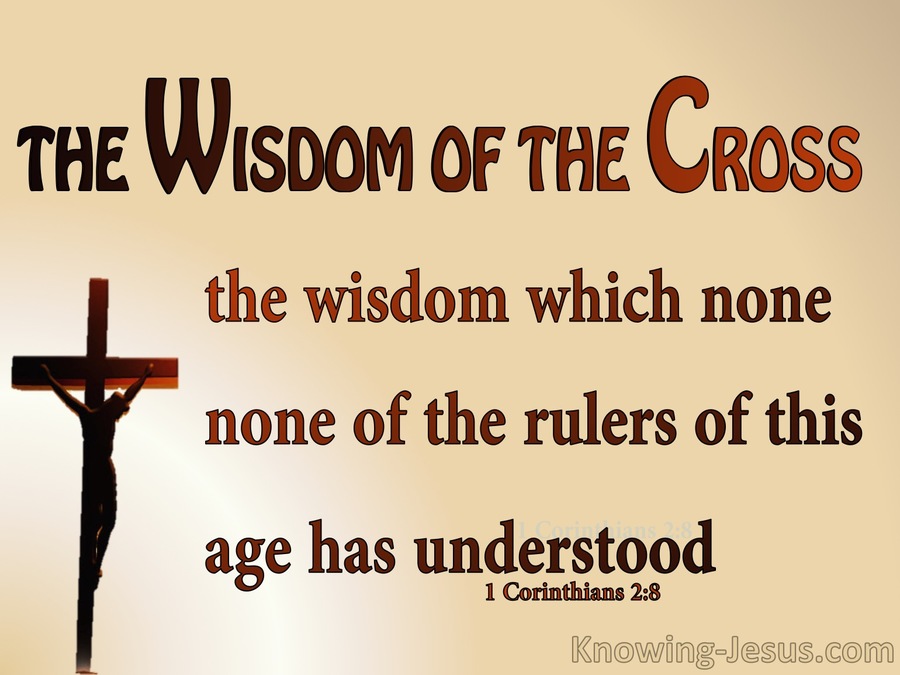
1 Corinthians 2:8 The Wisdom Of The Cross (brown)

Pope Francis prays at Mass on Wednesday for Europe to show unity in response to the Covid-19 crisis, and reflects on the depth of God’s love for us. (Playback included)


By Devin Watkins

As he began Mass in the Casa Santa Marta on Wednesday morning, Pope Francis urged all nations to be united as they face the Covid-19 pandemic. He prayed especially for Europe.
“At this moment in which unity is very necessary between ourselves and between nations, we pray today for Europe, so that Europe might succeed in creating this fraternal unity dreamt of by the founding fathers of the European Union.”


God loves us madly

In his homily, the Pope reflected on Jesus’ words to Nicodemus in the day’s Gospel (Jn 3:16-21): “God so loved the world that he gave his only-begotten Son, so that everyone who believes in him might not perish but might have eternal life.”
Pope Francis said this passage contains a wealth of theological revelation about Redemption.
He focused his attention on two aspects: the revelation of God’s love and the existential choice between light and darkness.
“God loves us,” said the Pope. “He loves us madly. As one saint used to say, God’s love seems like madness.”
Listen to our report


Cross contains all Christian wisdom

The cross, said Pope Francis, is the highest expression of this love. He added that everything is revealed to those who contemplate the cross.
"So many people, so many Christians, pass time gazing at the Crucified... And there they find everything because they have understood. The Holy Spirit teaches them that therein lies all science, all of God’s love, and all Christian wisdom. Saint Paul speaks about this, explaining that all human reasoning is useful only up to a certain point. But true reasoning – the most beautiful way of thinking which also explains everything – is the cross of Christ, is Christ crucified, who is scandal and madness. But He is the way. And this is the love of God. God so loved the world that He gave His only-begotten Son. Why? So that everyone who believes in Him might not perish but might have eternal life. This is the love of the Father who wants His children with Him."


Light over darkness

Pope Francis then reflected on the choice between light and darkness. He said there are some people – “including us sometimes” – who are unable to live in the light, because they have become accustomed to darkness.
“Light blinds them and they cannot see. They are like human bats: they can only move about during the night. We ourselves, when we are in a state of sin, find ourselves in this condition, unable to tolerate the light. It is easier to live in the darkness; light slaps us on the face and shows us what we don’t want to see.”


Corruption blinds

Though it is difficult to face what the light reveals to us, said Pope Francis, it is worse when the eyes of the soul become ignorant of the light.
“So many human scandals and corruption teach us this. Those who are corrupt do not know what the light is, and don’t recognize it.”


Child of God… Or bat?

Pope Francis concluded inviting us to let the light of God’s love shine in our lives through the Holy Spirit. And we can ask ourselves:
“Do I walk in the light or in darkness? Am I a child of God? Or have I ended up like a bat?”

[youtube https://www.youtube.com/watch?v=Ol6rVYoFY8k?wmode=opaque&rel=0&autohide=1&showinfo=0&wmode=transparent&modestbranding=1&enablejsapi=1&origin=https://www.vaticannews.va&start=&end=]
Full video of Pope's Mass

https://www.vaticannews.va/en/pope-francis/mass-casa-santa-marta/2020-04/pope-francis-mass-european-fraternal-unity.html

Saturday, April 18, 2020

Pope to celebrate Divine Mercy Sunday in Rome church


This year, the feast of Divine Mercy, which is celebrated on the Sunday after Easter, turns 20. Pope Francis will mark it on Sunday with a Holy Mass at the Church of the Holy Spirit in Sassia, the centre of the devotion to Divine Mercy in Rome.
  
By Robin Gomes

Some 200 meters from St. Peter’s Square is the Church of the Holy Spirit, the sanctuary and centre of the devotion to Divine Mercy in Rome, where Pope Francis will mark Divine Mercy Sunday, April 19. The Mass that will be streamed and televised live, will have only a handful of faithful because of the coronavirus lockdown in Italy and the Vatican.

Saints Faustina and John Paul II

The devotion to Divine Mercy was popularized by the 20th-century Polish nun, Saint Faustina Kowalska, as requested to her by Jesus in visions and conversations..
Saint Pope John Paul II instituted Divine Mercy Sunday on the occasion of the canonization of St. Faustina, April 30, 2000, the Second Sunday after Easter, thus opening the devotion and the feast of Divine Mercy to the Universal Church.
From his early years, Pope John Paul II had an ardent devotion to Divine Mercy, as promoted by Sister Faustina, who died in 1938 at the age of 33 in Krakow, where Karol Wojtyla was to become archbishop, cardinal and was later elected Pope in 1978.
Pope John Paul II who beatified Sister Faustina on April 18, 1993, Sunday after Easter, died on April 2, 2005, the eve of the Sunday after Easter.
John Paul II himself was beatified on May 1, 2011, Divine Mercy Sunday, and declared a saint on April 27, 2014, also Divine Mercy Sunday.
In an Apostolic Letter issued on the occasion of Divine Mercy Sunday, April 7, 2002, Pope John Paul II granted indulgences to Catholics who go to confession, receive Communion and recite specific prayers on that day.  Subsequently,  this was formally decreed by the Apostolic Penitentiary.

Popes John Paul II and Francis

During his general audience live-streamed on Wednesday, Pope Francis told Polish pilgrims that on Sunday, April 19, he will celebrate the feast of Divine Mercy, established by St. John Paul II, in response to the “the request of the Lord Jesus to St. Faustina”. “Jesus said: ‘I desire that the Feast of Mercy be a refuge and shelter for all souls.’ Mankind will not have peace until it turns with trust to My Mercy.”
The Holy Father urged that prayers be said with “confidence to Merciful Jesus for the Church and for all humanity, especially for those who suffer in this very difficult time”.
Divine Mercy is certainly a strong, common bond between the Popes John Paul II and Francis. “Dives in Misericordia” (Rich in Mercy), the 1980 encyclical of the Polish Pope is often cited by Pope Francis, the hallmark of whose pontificate has been mercy.
In this regard, we particularly recall the Extraordinary Jubilee of Mercy that Pope Francis called from December 8, 2015, to November 20, 2016.
Both the pontiffs are known for their sensitivity to human dignity, poverty, disease and suffering, and the need to show mercy.
Pope Francis envisages the Church as a “field hospital” that particularly reaches out to the least, the lost and the last. On the eve of his election, he said that “the Church is called to come out of herself and to go to the peripheries, not only geographically, but also the existential peripheries: the mystery of sin, of pain, of injustice, of ignorance and indifference to religion, of intellectual currents, and of all forms of misery.”
Today, the devotion to Divine Mercy is widespread across the world. Churches and shrines dedicated to Divine Mercy have sprung up across the world, most importantly the Divine Mercy Shrine in Krakow, which houses the remains of Saint Faustina. Built between 1999–2002, the sanctuary has been visited by 3 popes. Millions of pilgrims from around the world visit it every year.
https://www.vaticannews.va/en/pope/news/2020-04/pope-francis-divine-mercy-sunday-20-years-holy-spirit-church.html

Saturday, April 11, 2020

Easter offers solace for us all in the depths of coronavirus crisis

The fresco of angels by Friedrich Stummel and Karl Wenzel in Berlin’s Sacred Heart Chruch. Picture: iStock

Coronavirus has declared war on Easter, but I suspect that Easter will win in the end.

For only the second time in modern Australian history, churches are silent by state edict, this time silent at Easter, the season of triumph and resurrection.
Churches were closed briefly during the Spanish influenza epidemic of 1918-19. But there was such social unrest, such misery at being deprived of the comfort of church, and especially at a temporary ruling that banned clergy from quarantine areas meaning they could not minister to the dying — though ministers were more than willing to take the risks — that the restrictions were speedily revised.
Open-air church services, with everyone wearing masks, were quickly permitted. Today, church is only accessible online. It’s not a computer virus, after all.
But Easter is much more than a church service. Easter Sunday is the pivot of history. It also represents the apex of human solidarity.
Easter is love in the time of COVID-19.
The worst thing about the epidemic is the assault the coronavirus way of death makes on normal human solidarity. That’s an assault on Christianity. For Christianity is solidarity.
Coronavirus gives you a very lonely death. And loneliness is at the heart of all human misery.
Albert Camus, in his classic novel The Plague, an allegory of the Nazi occupation of France, ­observed: “The chief source of distress, the deepest as well as the most widespread, was separation.”
Throughout this time of virus we are torn apart, when we want to be together. And we never want more to be together than at the time of death.
Death is a part of life, a part of humanity. It comes to every person. But this virus means that a ­victim must die mostly alone, without a partner or relative or friend, or even a stranger, to hold their hand, to pat them on the shoulder, to encourage and console them with a touch or kiss.
Instead, the last sight for many will be a heroic health worker behind heavy layers of protective gear, looking something like a robot in an old science fiction movie. Perhaps at the last the ­patient will see only the distant eyes of a nurse, compassionate or preoccupied, caring or distracted, doing their best.
Easter is the human triumph over death. Of course it is a human triumph enabled by God. In Christian belief, Jesus is the Son of God, the second person of the Trinity. But he was also a man who lived and died, and then in Christian ­belief rose from the dead, a little over 2000 years ago.
Before he was known as God, he was known to his friends and family as a man. Fully human, fully divine, his divinity never diminished his human vulnerability.
Rightly transfixed as history is by the divine claims and nature of Jesus, it is too easy to lose sight of the intense humanity of his story. The gospels are worth reading, just for the story.
Selfless courage
The death of Jesus in the crucifixion, while agonising in a way that most deaths are not, has about it nonetheless something of the coronavirus death.
Like a COVID-19 patient, Jesus was in his death physically separated from the people who loved him most. At the foot of the cross were his mother, as well as Mary Magdalene and a beloved disciple. So often in the gospels, as in all the Christian story, it is the women who are the most faithful.
The things Jesus said as death approached tell a story not of an all-powerful, conquering god, with which the ancient world was all too familiar, and a facsimile of which so many people try to become today, but of a human man bearing the unbearable, which is the fate of all human beings in death.
Let me be very straightforward. I believe Jesus is God, as the gospels claim, but the God side of him didn’t overwhelm or subvert or ­negate the human side. The story of his life is therefore the ultimate story of human solidarity.
Much of Jesus’ last words ­recall to me things I have heard friends and family say as they lay in hospital beds approaching death. At one point, Jesus looks down from the cross at his mother, Mary. He instructs her, regarding the male disciple: “Woman, this is your son”, and to the male disciple: “This is your mother”. And from that day, Mary lived in the disciple’s house.
Everyone I have known approaching death has been concerned more than anything with the people they will leave behind. The request I’ve most often heard from a friend near death is: “Look after him when I’m gone” or “Keep in touch with her, won’t you?”. I heard a beloved uncle say as he lay dying: “Won’t you get my wife a cup of tea?”
In the ancient world, the childless widow was uniquely marginalised, generally with no income, often no home and no male champion to protect her. Jesus was concerned with Mary’s welfare in a practical way. Looking after his mother was all he asked of his ­disciple.
Viktor Frankl was an Austrian psychiatrist who survived Nazi concentration camps, including Auschwitz, in World War II. Out of that experience he wrote the magnificent Man’s Search for Meaning. He observed that the worst element of a beating, of which he received many, was the implied insult. Jesus’ death, alone on the cross, as he was mocked and ridiculed and humiliated, had the insult not implied but explicit.
And yet he prayed: “Father, forgive them, for they do not know what they are doing.”
This may seem virtuous beyond the scope of the human. Yet Frankl records prisoners in the camps who gave away their last piece of bread so that someone else might eat, manifesting through themselves the presence of God, even in a death camp.
But the most searing cry of Jesus on the cross surely was this: “My God, my God, why have you abandoned me?” Nearly, nearly, nearly Jesus shares our despair. Christianity is a religion in which God himself almost for an instant despairs of God. Even Jesus feels in this ­moment abandoned by God.
The story of Jesus is fulfilled in the Easter resurrection. Jesus conquers death. All of Christianity centres on the person of Christ. But as Frankl observes, the final freedom of every human being is the freedom “to choose one’s attitude in any given set of circumstances, to choose one’s own way”.
It is the attitude of Jesus to his death on the cross, while he is undergoing it, which is most telling. For after asking God why it is that he is suffering in this way, Jesus ­finally cries with a loud voice: ­“Father, into your hands I commend my spirit.”
It is his last statement before death. It is the culmination of Jesus’ life before the resurrection. And the centre of it is complete surrender of his human will to the Father and his complete reliance on the Father.
Into your hands I commend my spirit. I can do no more. I can say no more. I have no more solutions, no more agency, no more action. Father, I am yours.
If this seems superhuman in its devotion, I think in fact it is close to the attitude every believer tries to take to death: thank you for this life, please look after the people I love, I am sorry for my wrongs (Jesus didn’t need to say that), please let this suffering pass, now I am yours and I rely on you absolutely. That is how Jesus ­transcends his humanity — by surrendering absolutely.
So why do I say that Easter is the triumph of human solidarity?
The basic shape of all human solidarity is to stay behind with the suffering person, to make their ­suffering your suffering, to share the burden with them where you can, and where you can’t, simply to be by their side to hold their hand at the last, to stay with them all the way through. It’s as simple as sitting up with a sick child or spouse. To have that same care for people beyond your kin is a necessary, wider human solidarity. The sociologist of ­religion, Rodney Stark, in his The Triumph of Christianity, ­offers two striking sociological reasons for the early and rapid spread of Christianity.
First, Christians valued women and girls more than any movement in history. They didn’t ­practise female infanticide, so Christian families had many more daughters than pagan families. As a result, they were much happier and the daughters converted their pagan husbands.
Christian care
Second, Christians didn’t run away during plagues, but tried to help. Cyprian, a 3rd-century bishop of Carthage, who was later martyred, offered the main historic description of the 3rd-century plague that afflicted the Roman empire and that historians speculate may have been an influenza ­pandemic. There were said to be 5000 people dying in Rome per day, accompanied by all manner of barbaric and ruthlessly selfish ­behaviour — especially the shunning of anyone who was sick.
Cyprian wrote that the plague “searches out the justice of each and every one and examines the mind of the human race; whether the well care for the sick, whether relatives dutifully love their kinsmen as they should, whether masters show compassion for their ailing slaves, whether physicians do not desert the afflicted”.
Today we can admire profoundly the bravery of our medical frontline people, as well as the police and the fireys, who share the suffering of the afflicted and do not desert them.
So how does this all link up to Easter?
Throughout all human history, people have been conscious of God. But they haven’t always known whether God is near or ­distant, merciful or capricious, personal or indifferent.
In the life of Jesus, God uniquely expresses maximum solidarity with humanity, and with human suffering. He not only comes among us but literally becomes one of us, with all of our travails. He stays behind to share our ­suffering, to give it meaning and, on Easter Sunday, to redeem it in resurrection.
The story of Christmas and Good Friday and Easter Sunday is the story of God carrying out an act of human solidarity at great cost — becoming a human being, with all our limitations and pains, and then leading us beyond to an eternal life that is promised but not yet seen.
Peace lies within
What good is all that right now, when we can’t meet Jesus in the flesh, can’t see him for ourselves, can’t ask for his help?
In the extremity of his own suffering, Frankl found one deep consolation — the contemplation of his wife, who was in another Nazi camp, where she died. There was a time when he wanted nothing more than to be allowed to think of her, to conjure in his mind her face and her voice.
He recalled the Song of Solomon, from the Old Testament: “Set me like a seal on your heart, love is as strong as death.”
As he is forced relentlessly into pointless, cruel labour for the Nazis, Frankl can still find bliss in the mental image of his wife. For the first time, he understands the heavenly hosts of angels lost in perpetual adoration of God.
The contemplation of God is helped by the kindness of others. Christians try to bring the mercy of God, and the light of God, into the world through their actions. God knows often enough they mess it up dreadfully.
The church has always been messy. Jesus chose 12. One betrayed him to death, three fell asleep as he suffered in the Garden of Gethsemane.
The most important early church leader, Paul, had been a persecutor of the innocent. And Peter, the man Jesus chose to lead the Apostles, who became the leader of the Christians after the resurrection, denied Jesus out of cowardice.
If Jesus was human, so too were his followers. All too human, in fact. Yet Peter and Paul also found the conviction to go to their deaths as martyrs for their beliefs, executed by the brutal Roman ­emperor Nero. Every death suffered in hope is a kind of martyrdom.
The Easter resurrection is the triumph of all martyrs, and the hope of all human beings.

FOREIGN EDITOR
Greg Sheridan, The Australian's foreign editor, is one of the nation's most influential national security commentators, who is active across television and radio and also writes extensively on culture. He has w... 

https://www.theaustralian.com.au/inquirer/easter-offers-solace-for-us-all-in-the-depths-of-coronavirus-crisis/news-story/64e47113d3704cc0b7f1409e05fe4759